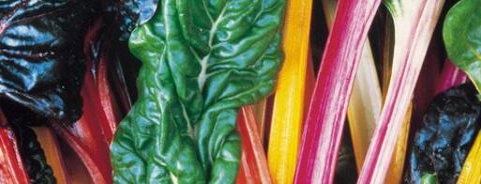
Swiss Chard
Beta vulgaris subsp. cicla
Swiss chard — especially the rainbow-coloured "Rainbow Chard" — is one of the most beautiful and productive vegetables in the garden. The large leaves with vivid scarlet, yellow, orange, pink, and white stems can be harvested continuously for months. Stems and leaves are cooked separately; both are delicious.
SowingBoth methods
Sunlight☀️ Full sun
Water💧💧 Moderate
Days to harvest60–80
Soil pH6–7.5
Spacing30cm × 35cm
Planting Calendar
🌏 Adjusted for southern hemisphere seasons.
Sow indoorsSow outdoorsTransplantHarvest
Jan
Feb
Mar
Apr
May
Jun
Jul
Aug
Sep
Oct
Nov
Dec
Cut and Come Again
Swiss chard is the quintessential cut-and-come-again vegetable. Remove outer leaves regularly, leaving the central growing point intact, and the plant will produce continuously for months.Two Crops
Spring sowings (April–May) provide summer and autumn harvest. A second sowing in late June or July provides a young crop to overwinter and harvest heavily in spring before it bolts.Overwintering
Hardy varieties like 'Perpetual Spinach' and standard Swiss chard will overwinter in all but the harshest winters. Cover with fleece during severe frosts. They are often productive until the following summer.Soil: Rich, fertile, moisture-retentive soil. Tolerant of heavier soils than most vegetables.